Truth
Jason Cherry
Jan 5, 2026
Introduction
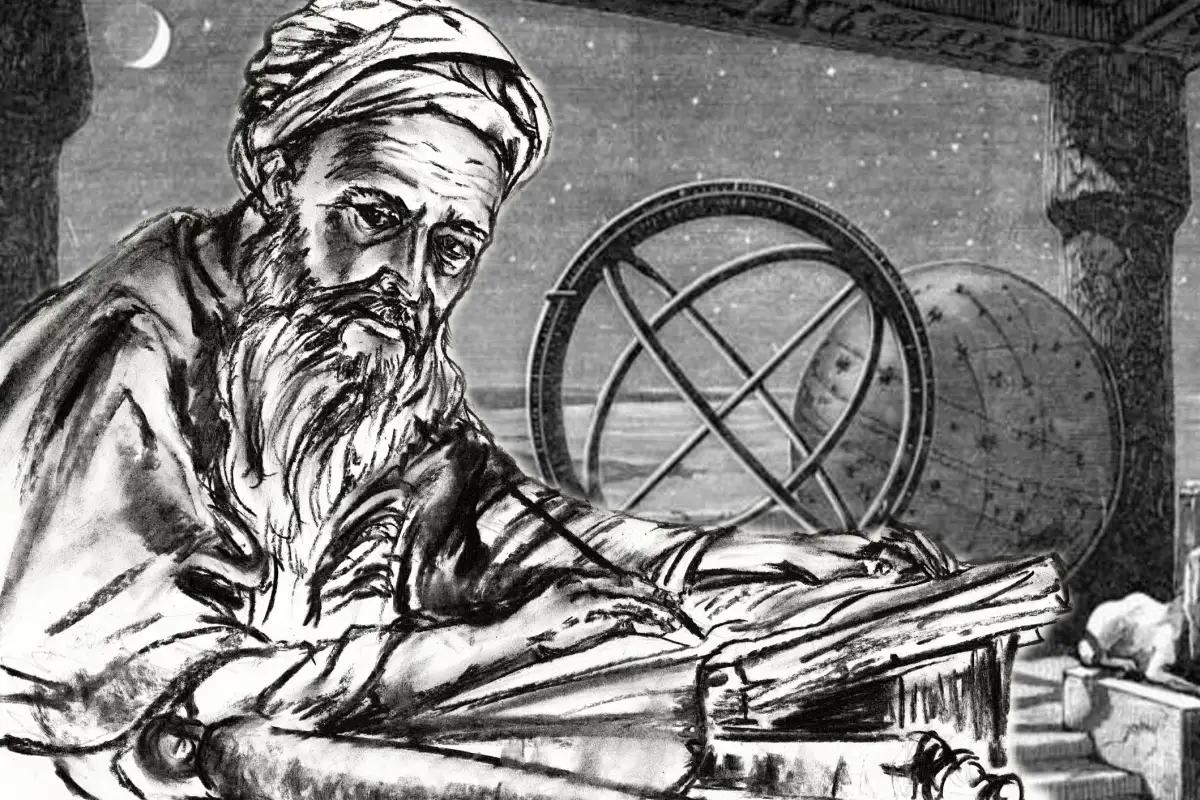
Algorithms have ancient roots. The word itself comes from the 9th-century Persian mathematician al-Khwarizmi, whose Latin-transliterated name became “algorithm.” But algorithmic thinking predates him. The ancient Greeks used the Euclidean algorithm for finding greatest common divisors around 300 BC. For most of history, algorithms were mathematical procedures. Things changed in the 1800s when Charles Babbage conceptualized mechanical computation. Ada Lovelace wrote what’s considered the first algorithm intended for machine processing.
Jump ahead to the 1930s and 1940s, and there is Alan Turing's theoretical work, there is the development of electronic computers, and in the 1950s, computer scientists were formalizing algorithm analysis. The internet age brought algorithms into daily life. Search engines in the 1990s, social media feeds in the 2000s, and recommendation systems everywhere by the 2010s. Today's machine learning algorithms can even modify themselves based on data, creating systems that make decisions in ways that can be unclear even to their creators.
An algorithm is a step-by-step procedure for solving a problem or accomplishing a task. Similar to how a recipe requires the chef to use certain inputs and follow specific instructions to produce a dish, algorithms are sets of rules that computers follow to process information, make decisions, or perform calculations. A simple algorithm might sort a list alphabetically. A more complex algorithm makes millions of micro-decisions to determine what content appears in someone’s social media feed based on thousands of factors. The information and images people see, or don’t see, are dependent on the choice of the algorithm. It is this latter type of algorithm, and each Christian’s relationship to it, that deserves a closer consideration.
Consider the algorithm’s relationship to five areas of human life
First, the Algorithm and Character
Algorithms guide you into the person you will become, which means the person who wrote the algorithm, and the system that uses it, guides you into the person you will become. Where do they guide you? To the content producers you can’t resist. Content producers are in a popularity contest. They adopt a strategy and a persona to get maximum attention, which is gained by controversy and polarization.
There are a number of strategies for polarization. Perhaps the laziest polarization strategy is to pit the generations against each other. It doesn’t matter that this play has been run a thousand times. The people who run it still get an audience, and the audience still irresistibly gravitates toward it. The first time the generations were labeled was the lost generation of World War I. Each generation since has received a label along with a list of traits. Think of generation grouping as critical theory for the generations, where each person embodies the generalizations with no account for variation. And, like in critical theory, each member represents the whole. One reason people keep thinking in terms of generational groups is that the algorithm drives them to identify with their generational cohorts.
Creating generational conflict is dependent upon one narrow principle: Convince people to trample upon anything held sacred by the previous generation. The way to legitimize yourself with your generation is to transgress the boundaries that previous generations considered closed. So, the weakness of a generational warfare heuristic is that it creates new norms, be they theological, historical, or moral, based on the imperative of rejecting whatever norm the previous generation established.
Ironically, this makes the newest generation identical to the previous generation. How so? The former generation formed their non-negotiables by the default rejection of the generation that came before them. Now, the new generation rises and forms its essentials by the default rejection of the generation that came before them. This Hegelian process is why generational warfare leads to a repeat of the same egregious errors of the past. But this shouldn’t be surprising. The point of generational warfare is not to solve problems or reveal beauty; it is to maneuver you into polarization.
Second, the Algorithm and Control
There are two signs you are being gamed by the algorithm. First, there is the difference in how you treat people online versus in the real world. When you go on social media, you are immediately fighting with fifty people—or bots—about language and generations and politics. But then, when you’re out in the real world and walk past fifty people, it never crosses your mind that you should stop and shout at them about language and generations and politics. The algorithm creates a contrast between the virtual world and the physical world. When you’re living in the real world, you’re not surrounded by constant arguments with everyone you pass. But when you live in the online world, it’s a series of endless arguments. You have become, in effect, two persons. There is the online version of you and the real-world version of you. And to the person in the grips of the algorithm, this strikes them as altogether respectable.
The second sign you are being gamed by the algorithm is the promethium confidence that you are the exception. You become blind to the fact that there are no exceptions. The sure sign that you are not the exception is that you think you are the exception. This blindness is by design. The algorithms are not designed to reveal the truth, but to reconfigure it in a revolutionary direction, because that is what it takes to hold you. So, “truth,” according to the algorithm, is whatever attracts users’ devotion, clicks, and return visits. It doesn’t matter if the content is historically bungling or malevolent. If it addicts the user, then it’s a new “truth.” But the user looks out upon the landscape of ideas with the assumption that all the rest of them have been taken in, but I’ve found the one true, unassailable hot take. This anthropological naiveté gives considerable control to the algorithm.
Third, the Algorithm and Sinful Nature
Each person goes online with a latent zeal for different opinions concerning religion, government, and many other points. Each person brings some combination of speculation and practice, along with an attachment to different leaders and podcasters who are ambitiously contending for attention and power. The sinful nature is inclined to divide mankind into factions. Inflamed wit likes to launch verbal rockets in order to stoke shared vitriol. The two sides are disposed to vex and oppress each other rather than yield to their shared humanity. So strong is this propensity of mankind to fall into mutual animosities that even a benign comment occasions the most frivolous and fanciful reactions, IN ALL CAPS! It takes hardly a spark to kindle the unfriendly passions and excite the most violent exchange of words.¹
Fourth, the Algorithm and Vanity
You know you are living in an extraordinary age because you willingly carry the screen in your pocket that runs the tech bros algorithm. You learn to hate what others love. You learn to divide by nation, class, ethnicity, and gender. You boast in the “uniqueness” of your tribe with brainsick vanity (Rom. 3:27), thinking that all those who don’t follow your favorite podcaster are inconceivably naive. As the algorithm steers you to your new masters, your vanity convinces you that you are living in righteousness and partaking of the heroic. Contempt for certain leaders, nations, and peoples is the result of a trail of digital breadcrumbs that people didn’t even know they were eating. It’s vanity because the algorithm steers you without you even recognizing it. To the degree you think you imagine yourself enlightened, you have lost contact with reality.
Fifth, the Algorithm and the World
The algorithm uses the screen and digital technology as its vector. It is not subject to the accumulated virtue of history, philosophy, or theology. It seeks to create a new mind, a new providence, a new transcendence. Social media especially invites this menacing shadow.
The user is algorithmically conditioned to practice digital rubbernecking. They are fed information and images that are hyper-specific to their taste. So they move from one irresistible thing to another. To achieve this, the algorithm panders to your immediate wants. This pomp of power is not that it complicates knowledge, but rather simplifies it. Even the most homely people now consume base and barbaric content as a matter of course. It is in the machine’s interest for users to give away their humanity for engorgement on screen time. This arc of the algorithm is to create not just a new person, but the accumulation of new persons, a new civilization that replaces human culture and virtue with an undefinable yet totalizing cyber-blather.
What’s the Solution?
What’s a faithful Christian to do? The reflex shouldn’t be anti-technology. Not only does that burst the bonds of the possible in today’s world, but it fails to tell the whole truth about technology. We must be on guard against the notion that new technology, generally, is corroding society. We’ve seen great technological accomplishments over the past 200 years, which were rooted in and reflecting the real world. Not all technology is in obeisance to the algorithm. We must be grateful for God’s bounty of good gifts while recognizing that behind our screens there is an automated decision maker running in the background, unseen, unacknowledged, and written by people who hate your God, your family, and your church. And, it’s worth remembering that both Saint Augustine and C.S. Lewis denied that technology necessarily equals progress, especially spiritual progress.²
Now to the two-fold solution.
First, the purposeful creation and preservation of human life.
In other words, technology should be applied in a way that reinforces agency, creativity, virtue, and in-person relationships. This requires circumventing the algorithm. If the technocracy is the manager, then you should become unmanageable. Resolve to have only needful engagement with social media, being even more suspicious of your weakness than you are of the politicians. Even the smartest and most lettered people have an enormous capacity for being taken in. This must be confessed daily. This honesty will guard you from the lie that you are able to confront the algorithm and win. If this requires a lifestyle change, then it’s worth it (Mk. 9:42-50). The more people speak to people face to face, deny themselves in physical ways, including their time, and choose to host a family for dinner rather than yell at someone on the internet, they are inclining their soul in the right direction.
The purposeful creation and preservation of human life requires you to not just side-step the grid, but to replace it. Shirking the influence of the algorithm gets easier when you pick up a book. Books need to again become the stimulus for the intellect, not to the exclusion of everything online, but as the fountainhead for intellectual activity. This will help you not only reject those things that are corroding organic society and relationships, but also embrace that which multiplies God-given abilities, virtue, and is directed at ordered achievement.
Second, the intentional spreading of that human life to include more and more people.
This begins with Sunday worship in person, not online. Then it extends into a world filled with people who need rootedness. A truly embodied lifestyle will include other people. It entails eating, serving, and giving. It involves plodding, laughing, and singing. It requires family, friends, and neighbors. Real human culture cannot be taught merely by giving the screens a new algorithm, even one that takes people to Shakespeare. All people have been born image bearers. They have the image of God stamped on their soul, which means all they need is an invitation to imagine the moral atmosphere of embodied existence.
A great deal of what is called life seems largely to consist of living it. So, you must invite people to no longer be obedient little servants to the enemies of life. It is an invitation to see that this whole machinery that is directed to facilitate the self-display of sinful desires is a bore. The life of a digital coxcomb is dull because it requires no courage or adventure. There is nothing world-changing or vigorous about willingly fading into the clutches of Lord Algorithm. One boasts in his labors to move the Overton window. All the while, the boaster's personal Overton window is a stream in the hand of the algorithm, turned wherever it chooses. It’s gullibility when someone willingly gives themself to the trap that has been laid for them, to roll into the enemy’s nets and fall asleep. This person has been bamboozled. He’s been taken in by the unnatural immolation of the life worth living. All he needs is an invitation to dance, to leap, and to believe. But how can you invite someone to enter the palace if you are the paladin of the prison house?
Jason Cherry is an elder at Trinity Reformed Church in Huntsville, Alabama, as well as a teacher and lecturer of literature, history, and economics at Providence Classical School in Huntsville. He graduated from Reformed Theological Seminary with an MA in Religion and is the author of the books The Culture of Conversionism and the History of the Altar Call and The Making of Evangelical Spirituality.
Footnotes
¹ James Madison, Federalist 10 in The Federalist Papers Federalist (Signet Classic, 1999), 73f.
² K. Alan Snyder & Jamin Metcalf, Many Times and Many Places: C.S. Lewis and the Value of History (Winged Lion Press, 2023), 42f.